
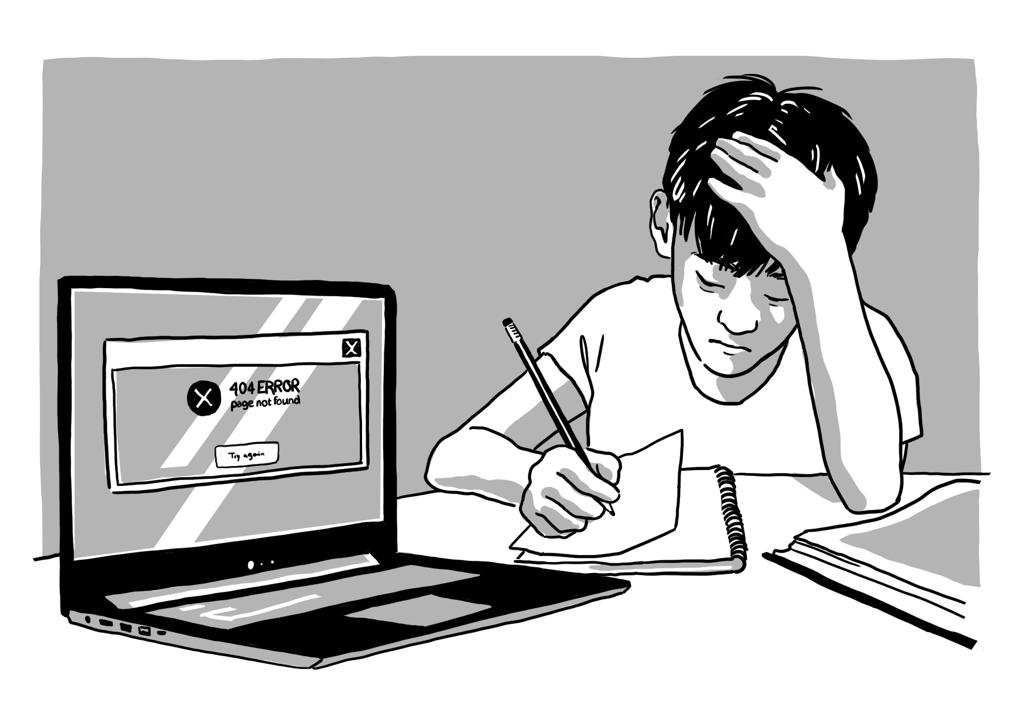
Thousands of schools from elementary to college have chosen to teach classes online this semester, and some students are finding it difficult to adjust to school without in-person classes.
The hybrid format could be putting students at a higher risk of mental problems. A recent study by Syracuse University found that the increased screen time of online instruction combined with the lack of face-to-face interaction was linked to an increase in cases of anxiety and depression in college students. Katie Lear, a mental health counselor who specializes in trauma and anxiety at Syracuse University wants to see more give and take between students and their professors. “Teachers who modify their expectations for what this semester should look like may find themselves with happier, healthier students,” said Lear.
Laura Smith, a tutor and former teacher in the Liberty School District, sees similar issues with her own younger students. She thinks teachers can play a role in supporting the mental health of their students. “There are some teachers that get on and they are super positive, they are happy and smiling. It seems so trivial, but it makes a huge difference when you’re watching their lessons. Then, there are some [teachers] that are kinda eh, they are probably not very happy themselves.”
In Liberty, Mo., public school students follow a hybrid schedule that supports two days a week of in-person learning and three days of online “flexible learning.” On days high school students are flexible learning, they are required to complete the assignments that are in their Canvas classrooms. While completing homework is a typical expectation of high school students, the same expectation is shared with elementary students in the new hybrid format.
Online schooling can also cause physical health problems with students. Matthew Walker, a neuroscientist at the University of California Berkeley, found that staring at a screen for hours at a time can cause tension headaches and cognitive focusing issues. However, the largest problem can be a student’s sleep schedule. Increased screen time makes it difficult to become restful when it is time for the student to fall asleep. This drives students to stay up later and throw off a student’s circadian rhythm or sleep cycle.

Smith recommends that during this challenging time parents should establish a good relationship with their child. So if they need to help with school work, there will be less “nagging” between students and parents.
“With my younger students there is a problem of not knowing where to turn things in, how to turn things in and how to advocate for themselves to get that information,” said Smith. “Students are behind in a lot of their work. They are not keeping up with it like they normally would.”
 Evan Sanders
Leave a comment